
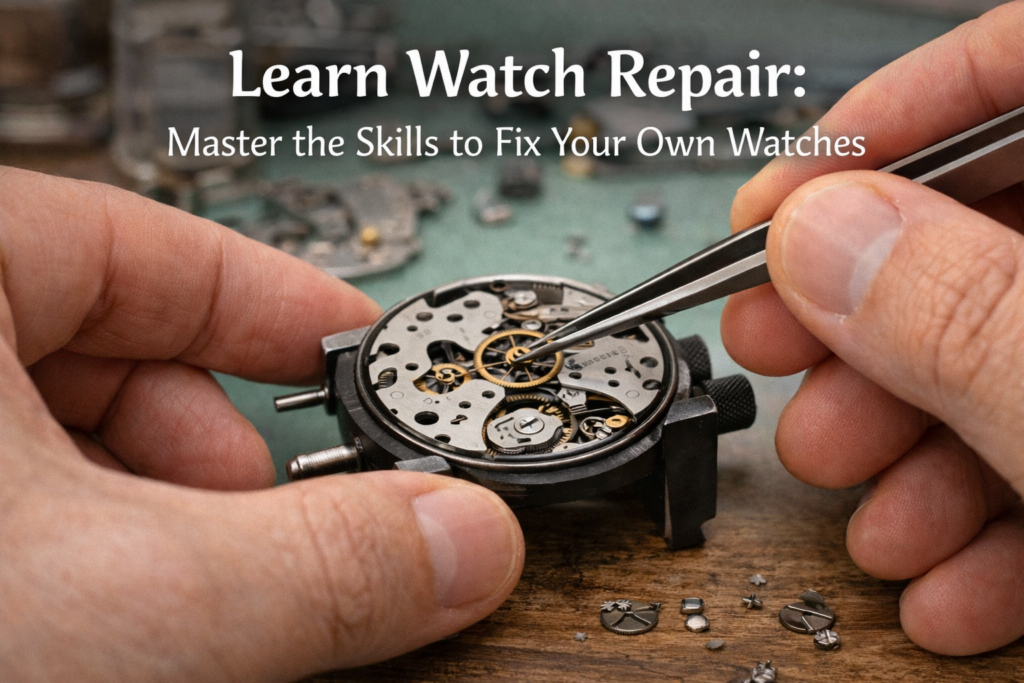
Learn Watch Repair: Master the Skills to Fix Your Own Watches
Based on real-world experience and a deep understanding of user behavior.
Watch repair can seem like a complex task, but once you understand the basics, you’ll realize that it’s a skill anyone can learn with practice and the right tools. In this section, we’ll break down what you need to start repairing watches and introduce you to watchmaking as a craft.
What You Need to Start Repairing Watches
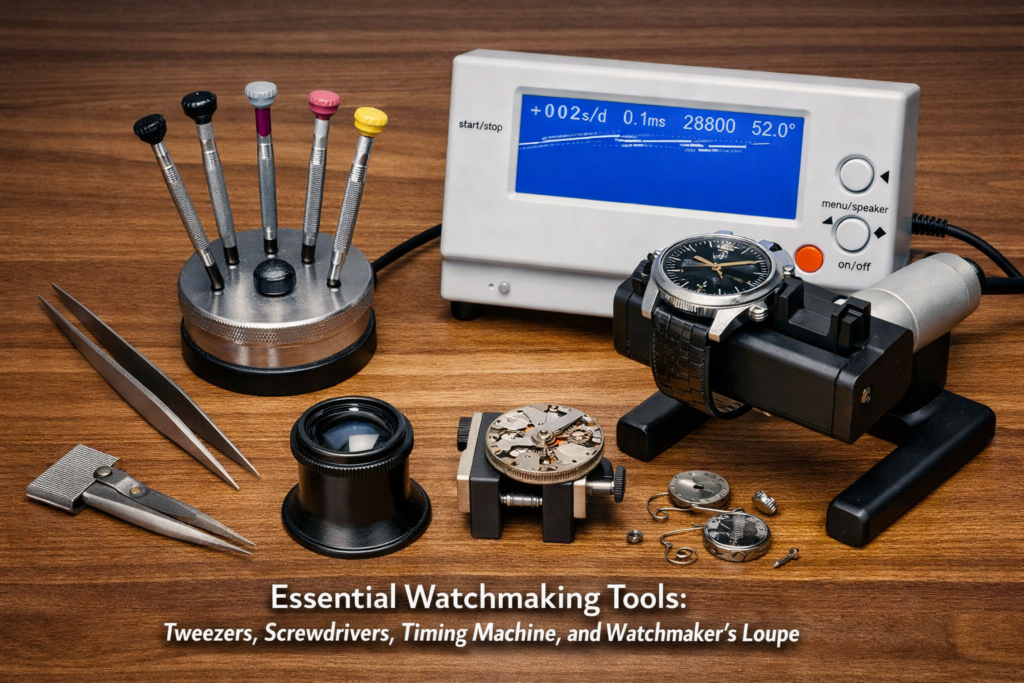
To begin repairing watches, there are a few essential tools and materials you’ll need. These tools will help you handle delicate parts like the balance staff, escapement, and mainspring safely. Here’s a list of the most important watchmaking tools to get you started:
- Tweezers: Used for delicate handling of small watch components.
- Screwdrivers: Crucial for removing tiny screws without damaging the case.
- Timing Machines: Helps in checking the accuracy of the watch movement after repairs.
- Watchmaker’s Loupe: For a close-up view of tiny parts during repairs.
These tools are the foundation of watchmaking and repairing watches. By practicing basic repairs, you’ll gradually build up your confidence and become skilled in watch repair techniques.
Understanding Watch Movements and Types
There are several types of watch movements, and understanding how they work will help you troubleshoot and repair your timepiece more effectively.
- Mechanical Watches: These watches are powered by a mainspring that must be wound by hand. They require a watchmaker’s expertise to repair internal parts like the escapement.
- Quartz Watches: Powered by a battery, quartz watches are easier to repair since they involve fewer mechanical parts.
Understanding these different movements will help you know what tools and techniques to use during repairs.
Essential Watch Repair Skills
Whether you’re fixing a faulty chronograph or replacing a watch battery, learning the right techniques is crucial for achieving professional-level results. In this section, we’ll explore essential watch repair skills and the step-by-step process of repairing watches.
How to Repair a Watch Movement
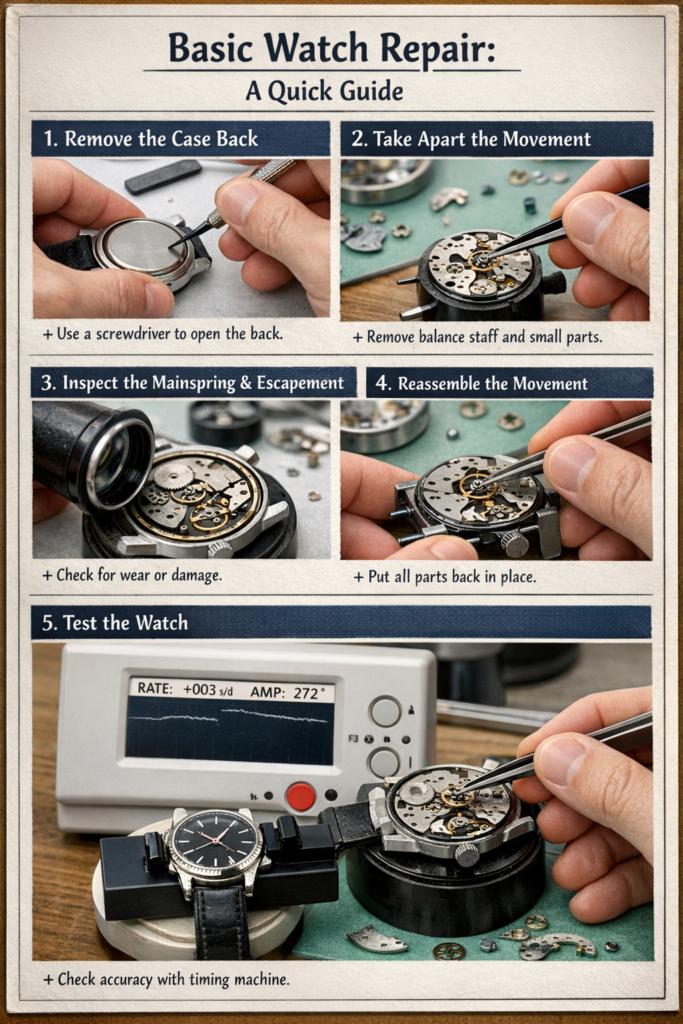
Repairing a watch movement is one of the most important skills for any watchmaker. If you’re new to this, start with a basic watch that needs minor repairs. Here’s a quick guide to get you started:
- Remove the Case Back: Use a screwdriver to remove the back of the watch carefully.
- Take Apart the Movement: With tweezers, gently remove the balance staff and other small parts.
- Inspect the Mainspring and Escapement: Look for any signs of wear or damage. If the mainspring is broken, it needs to be replaced.
- Reassemble the Movement: Carefully put the movement back together, ensuring each component is in its proper place.
- Test the Watch: Once reassembled, check the watch’s accuracy with a timing machine.
How to Replace a Watch Battery
- Open the Case: Use the appropriate tools to remove the case back or pop the back cover open.
- Remove the Old Battery: Using tweezers, carefully remove the old battery from its compartment.
- Insert the New Battery: Place the new watch battery into the compartment and make sure it fits snugly.
- Reassemble the Watch: Close the case back and ensure it’s sealed properly to maintain water resistance.
- Test the Watch: Check if the watch is working and if the hands are moving correctly.
This simple repair is something every aspiring watchmaker should know, as it’s a common issue for both modern watches and some vintage watches.
Troubleshooting Common Watch Issues
Is your watch showing incorrect time, or does it stop working altogether? Understanding how to troubleshoot common watch issues is a crucial skill for any watchmaker. Let’s dive into common problems you might encounter while repairing watches.
Chronograph Malfunctions
The chronograph is a complex function on watches, often requiring advanced skills to repair. Here’s a step-by-step guide to fixing some of the most common chronograph issues:
- Sticking Pushers: If the pushers on the chronograph are stuck, try cleaning them and ensuring no dirt or debris has accumulated inside.
- Time Reset Issues: If the chronograph hands don’t reset properly, check the pinion and make adjustments if necessary.
- Accuracy Issues: Use a timing machine to ensure the watch movement is running within the correct specifications.
These repair techniques are essential for keeping your chronograph functioning properly.
Water Resistance Testing
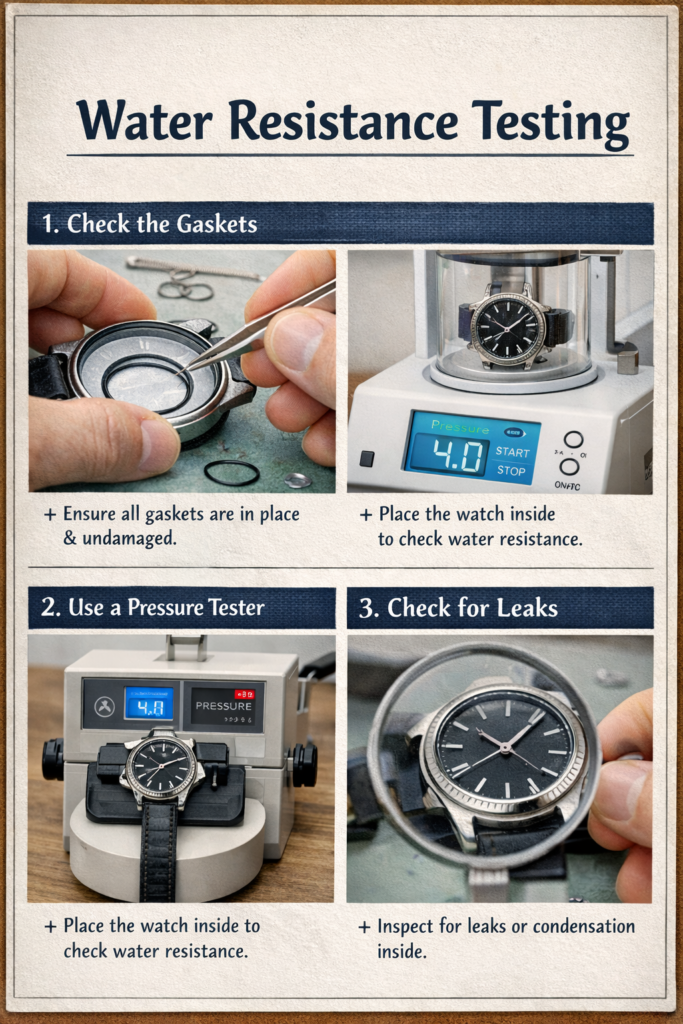
If your vintage watch or modern watch has suffered water damage, you need to ensure that it’s water-resistant after repairs. Here’s how to test it:
- Check the Gaskets: Ensure that all gaskets are in place and undamaged.
- Use a Pressure Tester: Place the watch inside a pressure tester to check its water resistance.
- Check for Leaks: After testing, inspect the watch for any leaks or condensation inside.
| Watch Type | Mechanism | Repair Complexity | Tools Needed | Common Issues |
| Mechanical Watch | Powered by mainspring | Moderate to Difficult | Screwdrivers, Tweezers, Timing Machines | Broken mainspring, Escapement issues |
| Quartz Watch | Battery powered | Easy to Moderate | Tweezers, Screwdrivers | Battery replacement, Power loss |
| Chronograph Watch | Mechanical & Electronic | High Complexity | Screwdrivers, Timing Machines, Specialty Tools | Sticking pushers, Reset problems |
| Vintage Watch | Mechanical (varied) | High Complexity | Precision tools, Tweezers, Loupe | Worn-out components, Parts replacement |
Becoming a Professional Watchmaker
Ready to take your watchmaking skills to the next level? Whether you’re looking to pursue a career as a professional watchmaker or simply improve your repairing watches abilities, there are clear paths and specific steps you can follow to advance in this exciting field. Watchmaking is not only about fixing timepieces it’s about mastering the craft and carving out a rewarding career. Here’s how you can get started and grow your expertise.
Watchmaking Training and Courses
The journey to becoming a skilled watchmaker begins with learning the right techniques. A structured watch repair course or formal watchmaking training is one of the most effective ways to enhance your skills and knowledge in the field.
- Why Take a Watchmaking Course?
A watch repair course offers more than just basic watch repairs it delves into the complexities of mechanical watches, escapement adjustments, mainspring repair, and much more. These courses often include hands-on experience, which is crucial for understanding how various watch movements work and how to troubleshoot issues effectively. - Notable Watchmaking Programs
If you’re serious about learning watchmaking, consider enrolling in a program at a prestigious institution such as the Joseph Bulova School of Watchmaking or the AWCI (American Watchmakers-Clockmakers Institute). These programs are recognized in the industry and offer comprehensive training, from repairing basic watches to mastering intricate repair and restoration techniques. - What You’ll Learn:
- Basic Watch Repair: Understanding watch movements, how to replace a watch battery, and repairing simple mechanical faults.
- Advanced Techniques: Learning how to handle high-end vintage watches, chronograph repairs, and water resistance testing.
- Tools and Equipment: Mastering the use of essential watchmaking tools such as tweezers, screwdrivers, and timing machines.
Completing a watchmaking course will not only give you the technical skills needed to repair various timepieces, but it will also build your confidence to take on complex repairs and restorations.
Building Your Career as a Watchmaker
Once you’ve completed your watchmaking training, the next step is determining the career path that aligns with your goals. As an aspiring watchmaker, there are several directions you can take. Each path offers unique opportunities for growth and specialization in the watch industry.
- Start Your Own Watch Repair Business
o Why Start a Business?
If you’re entrepreneurial and enjoy the hands-on aspect of repairing watches, starting your own watch repair business might be the perfect fit. With the rise of vintage watch enthusiasts and people valuing their timepieces more than ever, there’s a growing demand for skilled watchmakers who can offer repairs, restoration, and maintenance.
o Steps to Start:
Research Local Demand: Identify if there’s a market for a watch repair service in your area. Consider offering specialized services such as vintage watch restoration, or catering to high-end watches.
Set Up Your Workshop: Invest in the watchmaking tools necessary for a professional repair service. Having a dedicated workspace with equipment like timing machines, micromechanics tools, and proper lighting will make your repairs more efficient.
Market Your Services:- Build a website, set up social media accounts, and network with local watch retailers. Word of mouth can help build your reputation as a trusted repair professional.
- Work for Luxury Watch Brands
- Why Work for High-End Brands?
If you have a passion for luxury watches and want to learn from the best in the business, working for well-known brands like Rolex, Patek Philippe, or Bulova can be incredibly rewarding. These brands often require highly skilled and certified watchmakers to handle intricate repairs and maintenance on their premium timepieces. - How to Apply:
- Build a Portfolio: Create a portfolio showcasing your work, including photos and descriptions of repairs you’ve done. This is crucial when applying to work for luxury brands.
- Obtain Certification: Many luxury brands prefer certified watchmakers who have received formal training through accredited programs like the AWCI or Swiss watchmaking schools. Certification shows your level of expertise and trustworthiness in handling expensive watches.
- Networking: Attend watchmaker conventions, seminars, and trade shows to network with people in the Swiss watch industry. These events can offer insight into the latest trends and open doors for potential job opportunities.
- Why Work for High-End Brands?
- Become a Certified Watchmaker
- Why Certification Matters:
Obtaining certification as a watchmaker is one of the most important steps you can take to gain credibility and open doors for high-paying positions in the watchmaking industry. Many high-end brands and even independent repair shops seek certified professionals who can demonstrate their expertise. - How to Become Certified:
- Enroll in Accredited Programs: As mentioned earlier, enrolling in programs such as those offered by AWCI or reputable watchmaking schools is essential. These programs will not only teach you the necessary skills but also prepare you for certification exams.
- Pass Certification Exams: Exams typically test your knowledge of watch movements, repair techniques, and your ability to diagnose and fix common issues. Once you pass, you’ll have the credentials to call yourself a certified watchmaker, which is highly respected in the industry.
- Stay Updated with Continuing Education: Watchmaking is an ever-evolving craft, especially as technology improves. As a certified watchmaker, it’s essential to keep learning and stay updated with the latest tools, techniques, and trends in the watch industry.
- Why Certification Matters:
Conclusion: Master Watch Repair with the Right Skills
In conclusion, learning watch repair opens up a world of opportunities. Whether you’re repairing watches for personal use or looking to become a professional watchmaker, this guide has given you the foundation needed to start. By mastering key watch repair skills and gaining experience, you can start fixing watches like a pro.
Ready to start your watch repair course? Find the right training, practice your skills, and soon you’ll be repairing watches and understanding watch movements like a seasoned expert!