
Hidden Car Radio with Bluetooth: Best Hidden Car Stereo Guide (2026)
If you’ve ever stared at a bulky head unit crammed into your dashboard and thought, “there has to be a better way” — you’re not alone. Drivers everywhere are ditching the traditional stereo face for something sleeker, smarter, and completely out of sight. A hidden car radio with Bluetooth gives you all the wireless audio power you need without sacrificing the clean look of your interior.
Whether you’re restoring a classic car, building a custom show vehicle, or simply chasing a minimalist cockpit aesthetic, this guide covers everything you need to know — from what a headless stereo actually is, to how to pick the best one for your build.
What Is a Hidden Car Radio with Bluetooth?
A hidden car radio — sometimes called a headless car stereo, headless car audio unit, or bluetooth only car stereo — is a head unit designed to be mounted out of view. Unlike a conventional stereo that sits front-and-center in your dash, a hidden unit typically installs in your trunk, under a seat, behind a panel, or tucked away in a custom enclosure.
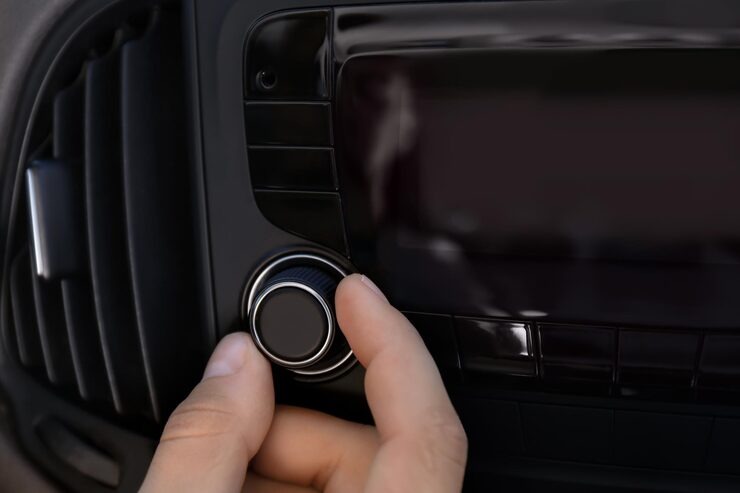
The “face” of the unit — the display, buttons, and controls — is either completely absent, minimal, or replaced by a smartphone app that connects over Bluetooth or Wi-Fi. You control everything wirelessly from your phone, a steering wheel control adapter, or a small remote.
This makes hidden car audio a perfect solution for:
- Classic car restorations where you want period-correct looks with modern sound
- Custom show cars where a stock dash opening would ruin the visual theme
- Security-conscious owners who don’t want to advertise expensive audio equipment
- Minimalist builds where a clean, uncluttered interior is the goal
Why Bluetooth Matters in a Hidden Setup
When there’s no visible face on your stereo, Bluetooth isn’t just a convenience — it’s the primary way you interact with your system. A quality hidden Bluetooth car stereo lets you stream music, take hands-free calls, switch tracks, and adjust volume, all from your phone or a paired device.
The technology has come a long way. If you want to understand exactly what modern wireless audio can do — range, speed, codec support, and more — this Bluetooth 5.0 features guide breaks it all down in plain language. The short version: newer Bluetooth standards mean less dropout, faster pairing, and dramatically better audio quality than the Bluetooth units of just a few years ago.
When shopping for a hidden bluetooth head unit, look for:
- Bluetooth 5.0 or higher — for stable connections and better range
- A2DP and AVRCP profiles — so you can stream audio and control playback remotely
- HFP (Hands-Free Profile) — for safe, legal phone calls while driving
- Aptx or AAC codec support — for higher-resolution wireless audio
Types of Hidden Car Stereo Setups
Not all hidden setups work the same way. Here are the most common approaches:
1. Bluetooth Car Amp with No Head Unit
A bluetooth car amp no head unit setup strips things down to the bare essentials. You run a dedicated Bluetooth receiver — essentially a small puck or module — that pairs to your phone and feeds an amplifier directly. There’s no tuner, no CD slot, no display. It’s a pure streaming setup.
This is the cleanest option for modern music listeners who live entirely on Spotify, Apple Music, or similar services. The amplifier does the heavy lifting, and the Bluetooth module is so small it can hide practically anywhere.
2. Compact Hidden Head Units
These are traditional head units in a shrunken, low-profile form. They have a tuner, often USB and AUX inputs, and full Bluetooth functionality — but the body is compact enough to mount inside a glove box, under a seat, or behind a custom panel. Many support smartphone app control so you never need to reach for the unit itself.
3. Trunk-Mounted Full Head Units
For builds with serious audio ambitions — multiple amplifiers, subwoofers, active crossovers — some builders run a full-size head unit in the trunk and route controls to the steering wheel or a custom button panel on the dash. This is common in competition-level sound quality and SPL (sound pressure level) builds.
Hidden Stereo for Classic Cars: A Special Case
If you’re working on a classic car restoration, the challenge is especially real. You want modern audio — reliable Bluetooth streaming, USB charging, maybe even navigation — without putting a modern-looking rectangle in a dash that was designed in 1967.
A hidden stereo for classic car builds solves this beautifully. The original dash stays completely stock. Visitors and judges at car shows see an authentic interior. But once the engine starts and your phone connects, you’ve got a full modern audio experience.
Some builders go even further by fitting a hidden radio for classic car installations inside factory speaker grilles, behind glove box doors, or in converted armrest compartments. Combine that with a discreet Bluetooth receiver and a well-placed amplifier, and you have a system that sounds incredible while remaining completely invisible.
Before you start routing wires on a classic, make sure your amplifier and head unit specs align with what your speakers can handle. This car stereo audio quality and equalizer guide is a great starting point for understanding impedance, power ratings, and how to tune your system correctly.
How to Choose the Best Hidden Bluetooth Car Stereo
With a growing number of options on the market, picking the right unit comes down to a few key factors.
Sound Quality
A hidden unit doesn’t have to mean compromised audio. In fact, many audiophile-grade builds specifically use hidden head units paired with separate amplifiers and premium speakers to achieve better sound than any all-in-one dash unit could deliver. Look for units with a high signal-to-noise ratio (SNR above 90dB), low total harmonic distortion (THD below 0.01%), and support for high-quality audio codecs over Bluetooth.
App Control and Usability
If you can’t see the unit, you need great software to control it. The best hidden auto radio options come with well-designed companion apps that give you full control over source selection, EQ settings, volume, and more. Before buying, check user reviews of the companion app specifically — a great unit with a buggy app is a frustrating experience.
Compatibility and Connectivity
Think about every source you want to use: streaming services, a phone call, a backup camera, USB audio files. Make sure the unit supports all of them. If Apple CarPlay or Android Auto are important to you, some compact and semi-hidden units do support them — this guide to Bluetooth car stereos with Apple CarPlay and Android Auto is worth a read before you commit to a unit.
Power Output and Amplifier Compatibility
Most hidden head units are designed to work with an external amplifier, so the built-in power output is less critical than it would be in a traditional setup. What matters more is the preamp output voltage (4V or higher is ideal) and how many preamp channels it offers (front, rear, and subwoofer outputs give you the most flexibility).
Build Quality and Heat Tolerance
Because these units are often tucked into enclosed spaces with limited airflow, heat management matters. Look for units with aluminum housings and check the operating temperature range in the specs. A unit that overheats in a hot trunk on a summer afternoon will cause nothing but headaches.
Wiring and Installation Tips
Installing a hidden auto stereo is more involved than swapping in a standard head unit, but it’s absolutely a DIY-friendly project with proper planning. Here’s what to keep in mind:
Plan your cable runs first. Decide where the unit lives, then map out the cleanest path for power, ground, speaker, and RCA cables. Running everything through factory grommets and along existing looms keeps the install looking professional.
Use quality power wiring. Hidden units paired with amplifiers draw significant current. Properly sized power cables with an inline fuse near the battery protect your vehicle and your equipment.
Ground everything properly. A shared, clean ground point is essential for noise-free audio. Poor grounding is the number one cause of alternator whine and interference in car audio.
Consider a remote turn-on wire. Your head unit needs to know when to power on. Route a remote wire (usually blue/white on most units) to your ignition or accessory circuit.
Label your connections. When the unit is hidden inside a panel or under a seat, troubleshooting a wiring issue later is much easier if every connector and cable is labeled.
Alternatives Worth Knowing About
A full hidden setup isn’t the right answer for every driver. If you want to weigh your options before committing, this rundown of Bluetooth car stereo alternatives covers everything from simple Bluetooth adapters for factory radios to modular DSP-based systems. It’s a good read if you’re still in the research phase and want to understand the full landscape before spending money.
Top Features to Look For: Quick Reference
Here’s a summary of what separates a great hidden bluetooth car stereo from a frustrating one:
- Bluetooth 5.0+ with A2DP, AVRCP, HFP, and SPP profiles
- High preamp output (4V or higher) for amplifier compatibility
- Dedicated front, rear, and subwoofer RCA preamp outputs
- Stable, well-reviewed companion app for smartphone control
- USB input for flash drive audio and device charging
- Compact, sturdy housing suitable for trunk or panel mounting
- Built-in DSP or compatibility with external signal processors
- Solid customer support and warranty coverage
Is a Hidden Car Radio Right for You?
If you care about the look of your interior as much as the sound of your audio, a hidden car radio with Bluetooth is one of the smartest upgrades you can make. It removes visual clutter, protects your investment from theft, enables a far more flexible audio system design, and — especially in classic cars — preserves the integrity of an interior that deserves to stay original.
The learning curve is real. It takes more planning than a standard head unit swap. But the result — a pristine interior with invisible, wireless, high-quality audio — is hard to match any other way.
With the right unit, a well-planned installation, and a solid amplifier to back it up, hidden bluetooth car audio delivers an experience that no factory-style setup can touch. And the best part? Nobody driving past you will even know it’s there.
Ready to dive deeper? Explore the guides linked throughout this article for detailed advice on Bluetooth specs, audio tuning, CarPlay compatibility, and the full range of car stereo alternatives available today.